Writing
Essays on knowledge, intelligence and systems people can read. The ones Almadar stands on come first.
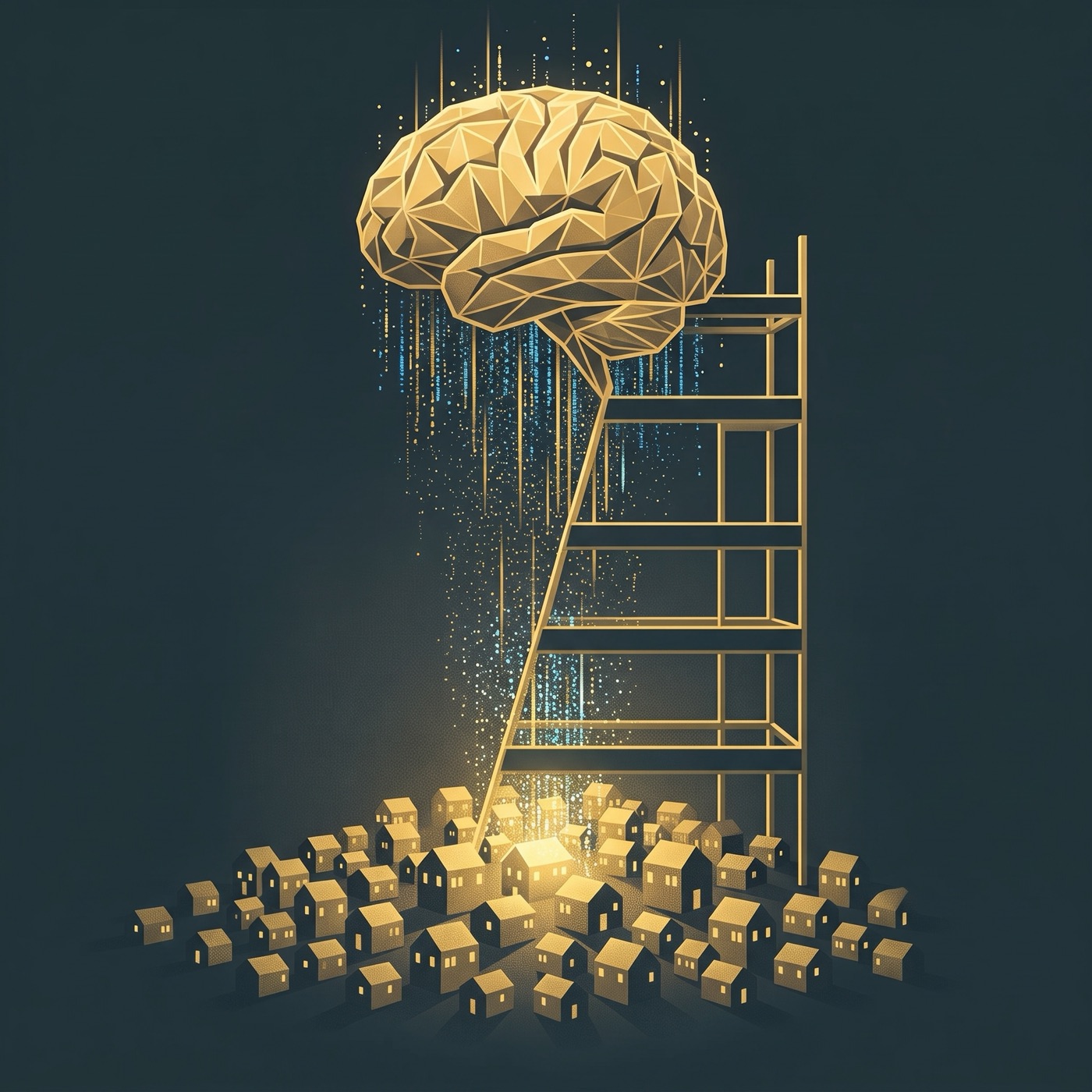
The Intelligence Ladder
How much intelligence does it actually take to build software? An intelligence ladder for software, and an alternative to the coding agent economy.

The Bootloader of Knowledge
An alien meets an apple with no knowledge of our world. Twelve steps, from noticing a change to choosing the next target, by which a system builds knowledge and checks its own method.
Knowledge: Between Generic and Specific
Everything we deduce falls into two modes, generic and specific. We move between them all the time, and most of our biases come from deploying a general rule too early or getting stuck on specific ones.
The Antidote to the Anecdote
Our lives are short and our experiences limited, yet we derive general rules from a single memory or story. That makes us easy to manipulate, and scientific inquiry is the antidote.

Ethical Software
Imagine a world where the behavior of any app or system is explicitly defined and shareable with its users.

Who Owns the Knowledge Inside Your Tools?
Who owns the rules inside the software your organization depends on? Almost always, nobody in your organization.

The Right to Understand the Systems That Govern You
Somewhere in your city, software decides who qualifies for housing, which school a child attends and whether a family gets food support. Nobody elected it, and nobody outside can read its rules.

We Need an Emission Test for AI
We test cars for emissions and rate appliances for efficiency. AI agents get none of this: no one asks how many tokens a system burned to answer a yes-or-no question.

The Employment Crisis Nobody's Talking About
Everyone is debating whether AI will take our jobs. The better question is what happens to human agency when the systems that run our lives are owned by a handful of companies.

Figure It Out As You Go: Designing Software in the Age of AI
You don't need a perfect design upfront. You need a direction and the willingness to keep refining until things converge.
The Dream Framework: How Organized Thought Lets You Build Anything in the AI Age
AI doesn't fix messy thinking. It accelerates it. The bottleneck is knowing what to build and being able to say it clearly.
You Learn Faster When You Tell AI What You Already Know
Most people ask AI to explain things. Fewer ask it to explain things to them specifically.

Finite State Machines: The Most Underused Design Pattern in Frontend Development
If you're using useState for complex UI, you're probably doing it wrong. There's a 50-year-old solution you're ignoring.

JSON That Thinks: A Programming Language Inside JSON
What if JSON wasn't just a data format, but a programming language? A Turing-complete language that is a strict subset of JSON.